

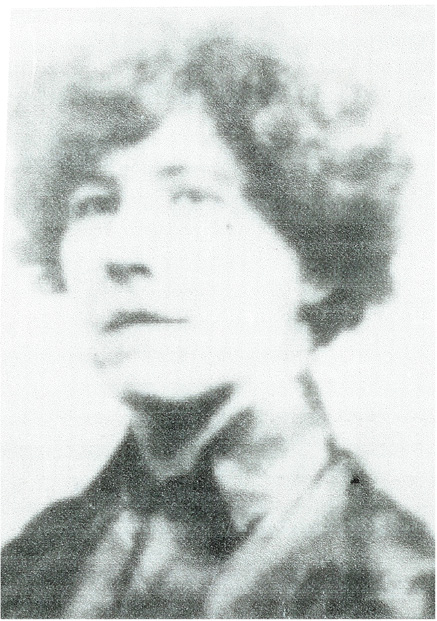
“Justifiable and in self-defense,” or Getting Away With Murder: A History of the Coal & Iron Police
Note: This piece began as a Bluesky thread and was then adapted into an article and published on Medium back in January. I am re-publishing it here today, to make it available to more readers, in honor of the anniversary of the murders of Joseph Strzelecki and Fannie Sellins.
For reasons that absolutely definitely don’t have anything at all to do with current events, I find myself thinking about the Coal & Iron Police and all the immigrants and other people they terrorized and murdered.
If you know, you know. And if you don’t, you probably shouldn’t look up what happened to Fannie Sellins for reasons similar to why you should not watch the video of what happened to Renee Nicole Macklin Good.
The gist — in 1919, they murdered Fannie Sellins for daring to object to them murdering Joseph Strzelecki (or Starzeleski). These weren’t the first people the Coal & Iron Police murdered, nor the last. And their deaths were only a few of the many atrocities that have been committed in the name of law and order throughout history. The times we’re living in are not unprecedented.
But neither is ending a law enforcement agency.
The Coal & Iron Police (C&I) were founded in 1865. The coal, railroad, and iron industries insisted that their properties needed more protection than local law enforcement could provide, so the Pennsylvania State Legislature passed State Act 228. The C&I received their commissions from the state but were paid for by private companies. In addition to guarding company properties, the Coal & Iron Police were used to keep workers in line, in much the same way as Baldwin-Felts and Pinkerton agents were used. In fact, the early C&I were under the supervision of the Pinkerton Detective Agency and played a part in their efforts to suppress alleged Molly Maguire activities during the 1870s, and throughout its history, Coal & Iron deputies were often recruited from the Baldwin-Felts, Pinkerton, and other private detective agencies.
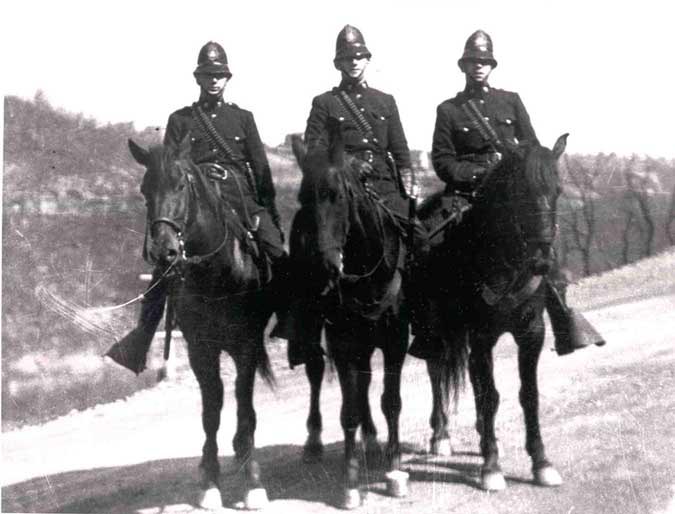
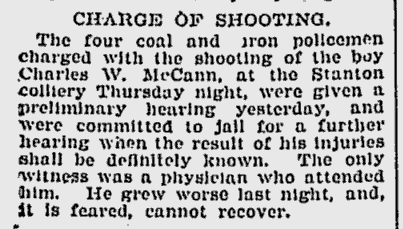
The Coal & Iron Police were notably employed during the Great Railroad Strike of 1877 and the Homestead Strike of 1892. In both instances, they ultimately failed to quell the unrest and the National Guard was brought in to do it for them. They failed again during the Anthracite Coal Strike of 1902, and while public opinion was largely unsympathetic toward striking workers, incidents like the shooting of young Charles McCann, didn’t exactly make the C&I look good.
In 1903, President Theodore Roosevelt’s Anthracite Coal Strike Commission recommended that the employment of the Coal & Iron Police should cease.
The Commission thinks that the practice of employing deputies, upon the request and at the expense of employers, instead of throwing the whole responsibility of preserving the peace and protecting property upon the county and State officers, is one of doubtful wisdom, and perhaps tends to invite conflicts between such officers and idle men, rather than to avert them… The employment of what are known as “coal and iron policemen,” by the coal-mining companies, while a necessity as things are, militates against the very purpose for which they are employed… The employment of this body of police is authorized by law, but they are really the employees of the coal companies, and thus do not secure the respect and obedience to which officers of the law are entitled. Their presence is an irritant, and many of the disturbances in the coal regions during the late strike grew out of their presence.
— excerpt from Report to the President on the Anthracite Coal Strike by the Anthracite Coal Commission
It would be another twenty-eight years before the Coal & Iron Police actually met their end.
Although, Pennsylvania disregarded the suggestion to abolish, dissatisfaction with the C&I did contribute to the establishment of the Pennsylvania State Police in 1905. However, instead of a replacing the C&I, the State Police often collaborated with them, as did other police forces. And despite the perception that receiving their pay from private companies made the Coal & Iron Police worse than their publicly funded counterparts, they were not particularly unique in their violence.
For example, both the C&I and the Pennsylvania State Police were employed during the 1910–1911 Westmoreland County Coal Strike. The C&I were brutal, especially in stopping strikebreakers who tried to quit after learning they were hired as scabs. The Pennsylvania State Police were just as bad and sometimes worse.
The Pennsylvania State Police, though not paid by the companies, took the side of the coal companies and used the same tactics as the deputies and coal and iron police. This also paralleled national trends. Slovak miners referred to the Pennsylvania State Police as the “Cossacks” which indicates the disdain in which they were held… When asked what they did when foreigners got out of hand, a young trooper responded: “We ride in, scoop them up and beat hell out of them.”
And it was members of the Pittsburgh Bureau of Police who, in 1915, founded the Fraternal Order of Class Traitors, so that they could have the benefits of a union while they fought bravely and tirelessly to make sure no one else did. And I’ve already mentioned the National Guard, which has regularly been used to protect America from people fighting for their unalienable rights to life, liberty, and the pursuit of happiness.
Yes, there are a few examples here and there of police officers taking the side of the workers, such as Sheriff John E. Shields during the Westmoreland Strike. But policing, like too many of our institutions, has a long history of prioritizing protection of the wealthy and service to the powerful.
Because men with wealth and power say freedom is when no one can take what you have, so you can only be free if you fight for their right to keep what they have. And if you protect their wealth and power well enough, they’ll give you a little of your own. And as long as you continue to deserve it, they’ll let you keep your little bit. As long as you understand that you’re only as worthy as what you’re worth to them. So, be what they tell you to be. Know your place and be grateful for it. Never expect or ask for better and hate anyone who does. If you want something, you must work for it. The Haves earned everything they have, you must too. By working for them, by serving them. Anyone who demands a life better than what they’re given is lazy and worse, trying to get more by stealing it from you.
But let’s get back to Fannie.
Fannie Sellins was certainly not an innocent bystander who just happened to be in the wrong place at the wrong time. She was a labor activist, known for committing such heinous deeds as helping poor miners’ families get food and clothing and care for their sick.
She’d begun her career as a widow, struggling to support her four children by working in the garment industry in St. Louis, Missouri. The factory that employed her had been small when she started there, but it had prospered and grown by exploiting its workers. Long hours, low pay, and unsafe conditions. Eventually, however, the women decided to unionize. Fannie helped organize Local #67 of the International Ladies’ Garment Workers’ Union and, in 1911, they went on strike for a 9-hour-day and better wages.
The success of the strike, and Fannie’s role as one of the union’s negotiators, caught the attention of Van Bittner of the United Mine Workers’ of America (UMWA). He recruited Fannie to become another Mother Jones, working with miners and their families, and in 1913, she moved to Colliers, West Virginia.
Efforts to organize the mine workers in that region had been stalled due to a series of anti-labor rulings by Judge Alston G. Dayton, including an injunction against the UMWA. Fannie violated the injunction and was arrested.
“I am free and have a right to talk or walk any place in this country as long as I obey the law,” she said. “I have done nothing wrong.”
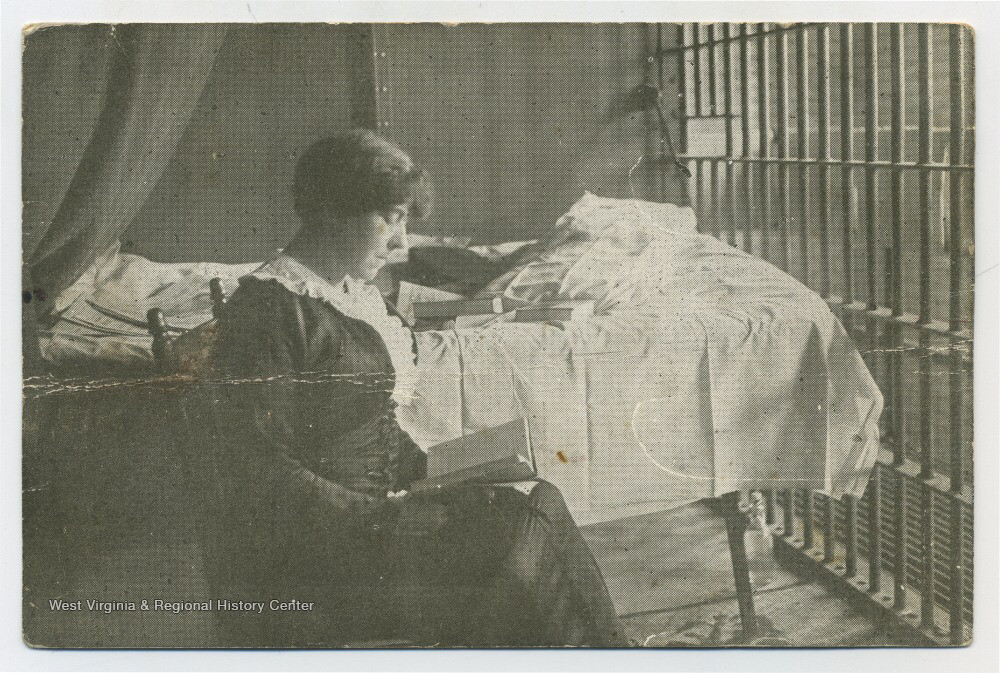
The UMWA circulated postcards with a photo of her in prison, looking unbothered. After her murder, photographs of Fannie — specifically her corpse* — again circulated to stir up support among workers. And not just miners but also steelworkers engaged in the 1919 General Steel Strike.
*Warning: the image is upsetting and likely to come up if you search for more about Fannie
Because on August 26th, 1919, Fannie was in Pennsylvania, supporting the striking miners of Allegheny Coal and Coke Company, which supplied Allegheny Steel.
There were many witnesses, but their testimonies varied, so exactly how the violence broke out remains unknown. Little is known about the miner Joseph Strzelecki. In some accounts he’s referred to as a strikebreaker and in others as a picketer. Perhaps he was both — a miner hired to replace a striking worker, who tried to join the strike instead. But regardless of what started it, Fannie saw the Coal & Iron policemen beating Joe, and when she tried to intervene, she was beaten too. Then, shots broke out. When it was all said and done, five men were wounded and Fannie and Joseph were dead. According to the autopsy findings, Fannie Sellins was shot twice and Joseph Strzelecki was shot five times.
The coroner’s jury didn’t both sides the deaths. They didn’t call the incident an unfortunate tragedy. “Justifiable and in self-defense,” they pronounced, adding, “We also Criticise and deplore the action of Alien or Agitators who instill Anarchy and Bolshevism Doctrines in the minds of UnAmericans and uneducated Aliens.”
The attitude of the jury was deeply ingrained in American culture, certainly exacerbated by the post-Revolution Red Scare but not caused by it. Striking workers had been characterized as idlers and rioters for pretty much as long as there had been labor strikes. The rise of the eugenics movement had given pseudo-scientific justification to discrimination. Allan Pinkerton had been scaremongering about communism back in the 1870s. The Haymarket Affair in 1886 and the unsuccessful attempt to assassinate Henry Clay Frick in 1892 had permanently linked anarchism and labor activism in the minds of many. Representatives for the mine owners had argued that unions were anti-American in statements to the Anthracite Coal Commission.
Throughout the strikes of 1919, owners easily took advantage of these sentiments to keep public opinion against strikers, claiming that the disorder was really only the work of a few agitators, organized and financed by communists and Bolsheviks and foreigners, who were manipulating the ignorant workers to undermine American democracy.
Another old tactic was taking advantage of prevalent nativism and racism. In some places eastern Europeans who didn’t speak English were recruited to be strikebreakers. In other places, they recruited African-Americans and Mexicans to be strikebreakers. Fear and prejudice of The Other was used both to keep workers pitted against each other, instead of united against the bosses, and to keep the public from supporting the miners.
These same anti-immigrant and racist attitudes would fuel the growth of Ku Klux Klan activity in western Pennsylvania throughout the 1920s.
Part of Klan recruiting was tough-on-crime rhetoric. Often, it was black people who were portrayed as the criminals. For an example of harm done by racism and the Klan in western Pennsylvania, see the 1923 Rosedale Banishment. But they also claimed that they would make the country safe from the lawlessness and destruction of “foreign labor agitators.”
The genesis of the Klan in these attitudes is important for the question of ideological definition. There is some question in the literature about whether the movement can technically be described as fascist, but its historical origins were almost identical to those of European fascist movements. They, too, originated in reaction to the failed radicalism of 1919–1920, and advocated the rights of native labor in partnership with capital, against some insidious foreign foe. They too advocated a return to tradition, military virtues, and paramilitary structure. If a movement like the Ku Klux Klan in its Pennsylvania form had existed in contemporary Europe, historians would have no hesitation in calling it a fascist group on the model of Italy, Spain, or Germany.
— excerpt from “The Ku Klux Klan in Pennsylvania, 1920–1940” (1986) by Philip Jenkins
One reason why the fascism of the Klan was able to take root so readily in western Pennsylvania is that fascism was already rooted there, in part as a legacy of the authoritarian control that company towns exerted over their residents.
In the spring of 1922, the United Mine Workers went on strike. The newly formed ACLU offered its support. Meanwhile, in Pennsylvania, mine owners shored up their defenses with extra Coal & Iron Police. One place that did this was the company town of Vintondale.
Vinton Colliery Company endeavored to make Vintondale a picture perfect exemplar of why unions weren’t necessary. They kept the company owned houses well-maintained and whitewashed, and they supplied the town with a variety of entertainment options. They also dictated what social activities Vintondale residents could be involved in and how they voted in elections and who was allowed in and out of the town. Union organizers were kept out. Workers with union sympathies were swiftly fired and evicted. Coal & Iron Police were employed to enforce the company’s strict authority.
When the 1922 strike began, Vinton Colliery Company hired extra C&I, arranged a National Guard encampment, and set roadblocks around the town.
Heber Blankenhorn, journalist and union activist, went to investigate Vintondale and was run off by police chief, Jack Butala, who he called “Brutella.” Blankenhorn spread word of his brief observation of Vintondale in the liberal press and amongst his friends. One of his friends was lawyer Arthur Garfield Hays, one of the co-founders of the American Civil Liberties Union. After additional prompting from the ACLU, Hays went to Vintondale himself.
Now, although Vinton Colliery Company owned most of Vintondale, there was some private property in the town. In 1903, the UMWA had purchased a building, intending to use it as a union hall. Although they had been driven out, the union still owned that building in 1922. Alongside other charges by Hays and the ACLU, the union turned the mine owners’ common refrain back on them, asserting that Vinton Colliery Company was infringing on their property rights and interfering with their right to conduct business.
The strike ended before the legal battles did.
The Vintondale case was, overall, more successful for Vinton Colliery Company, illustrating the history of how “law and order,” in both judicial judgment and police enforcement, has been upheld when it serves the interests of the wealthy and powerful establishment and disregarded when it doesn’t. The case also illustrates how bosses manipulate public opinion against workers by weaponizing the language of democracy, labeling those who are fighting for human rights as enemies of freedom and those trying to make their country a better place as unpatriotic.
Copaganda was and is an important part of this kind of manipulation, promoting the idea that law enforcement is inherently deserving of respect and adulation and that everything they do is justified by their job of upholding the law. And if you’re not with them, you’re against them. By this logic, drawing attention to uneven enforcement of the law, questioning whether the laws being enforced are just in the first place, and anything else that is not worshipful deference becomes construed as attacks against which police have the right to defend themselves, and ‘merica, by any means necessary.
With this sort of justification, the Coal & Iron Police were allowed to get away with murder time and time again.
And then, in 1929, they committed yet another murder.
John Barcoski was a miner who had immigrated from Poland to the USA in 1906. He worked for the Pittsburgh Coal Company and he was in the union. On the evening of February 9th, 1929, he went to his mother-in-law’s house and there he was severely beaten by Coal & Iron Police officers. He died in hospital the following morning.
As with Fannie Sellins, the Coal & Iron Police claimed self-defense, in contradiction to the testimony of eyewitnesses, and the jury went with the lie. The District Attorney denounced the jury as “incompetent and without moral stamina.” The judge agreed with him. Many others agreed too.
Whereas in 1919, the Coal & Iron Police had been able to take advantage of the first Red Scare, divided opinion of active strikes, and the postwar attitude that would come to be represented by Harding’s slogan “return to normalcy,” in 1929, the public was skeptical of the C&I even before Barcoski’s death.
In 1928, the ACLU reported that “more police violence, brutality, violations of civil rights… exist in Pennsylvania today than in any other state of the Union.” And John Barcoski didn’t die on the picket line. There had been a strike at Pittsburgh Coal Company, where he worked, but it ended in December 1928. That strike was followed by newspaper speculation about investigating the conduct of Coal & Iron Police officers and whether they should continue to be employed.
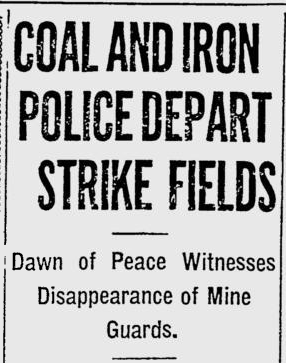
So, the murder of John Barcoski and the failure to bring the individuals responsible to justice only increased public opinion that something must be done about the Coal & Iron Police as a whole.
Pennsylvania state legislator Michael Musmanno made it his mission.
But though Governor Fisher signed a bill that was introduced by another lawmaker, limiting the Coal & Iron Police’s jurisdiction, he vetoed Musmanno’s bill to abolish the C&I.
Musmanno’s short story “Jan Volkanik,” inspired by the murder of Barcoski, didn’t change the world either.
Musmanno’s mission was better served by work outside the spotlight, keeping pressure on Governor Gifford Pinchot and refusing to let lawmakers think that the C&I problem would be resolved by anything less than abolition.
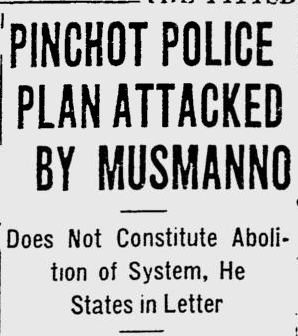
In 1931, Pinchot allowed the Coal & Iron Police commission to expire and didn’t renew it. His statement on the decision referenced the murder of Barcoski.
Eventually, “Jan Volkanik” was combined with Harry R. Irving’s play Bohunk and adapted into the 1935 film Black Fury, starring Paul Muni. Muni advised Musmanno that Hollywood would never make a film with the activist zeal of the short story, so the story was significantly toned down and censored. However, when some places threatened to ban the film unless the murder by the Coal and Iron Police was removed, Musmanno countered with a threat of suing. It worked. The murder remained. And the controversy was used by theaters to hype the film and sell tickets.
Black Fury (1935) is, in many ways, a disappointment, but it did spark conversation. It also contributed to the passage of a bill which repealed the Industrial Police Act and made it illegal for companies to employ private police.
!['COAL AND IRON' COPS ABOLISHED Bill Making Company-Hired Police in Pennsylvania Illegal [By The Associated Press] Harrisburg, Pa. June 15. The "coal and iron" police who ruled company towns in Pennsylvania's great centers of industry for years, were abolished by the stroke of a pen today. Gov. George H. Earle signed a bill making company-hired police illegal.](https://braegrosz.com/wp-content/uploads/2026/08/youngstown-vindicator-6-16-1935.png?w=309)
It can be dispiriting to look back, to be aware of how history repeats, and feel frustrated that we haven’t come further. But what I take away from remembering these things is a reminder that the battles won were only won by continuing to fight, despite losses.
So, don’t give up. That’s what they want.
REFERENCES
American Civil Liberties Union. The Shame of Pennsylvania (1902). New York. https://archive.org/details/a505s5_1928/mode/2up.
Anthracite Coal Strike Commission. Proceedings of the Anthracite Mine Strike Commission, Reprinted from The Scranton Tribune 1902–1903. https://archive.org/details/proceedingsofant00unit/page/n3/mode/2up.
Anthracite Coal Strike Commission. Report to the President on the Anthracite Coal Strike of May-October, 1902 (1903). Washington: Government Printing Office. https://archive.org/details/reporttopresiden00unit_7/page/n8/mode/1up.
Boyer, Richard Owen and Morais, Herbert M. (1955). Labor’s Untold Story. United Electrical, Radio & Machine Workers of America, Pittsburgh, PA. https://archive.org/details/laborsuntoldstor00boye/page/n3/mode/2up.
Butler, Frank. “Coal and Iron Justice” (1929, October 16). The Nation via ExploreHistory.com. https://explorepahistory.com/odocument.php%3FdocId=1-4-29A.html.
“Coal and Iron Police” (2025, December 27). In Wikipedia. ttp://en.wikipedia.org:80/wiki/Coal_and_Iron_Police.
“The Coal and Iron Police: A Sub-group of the Honorable Michael A. Musmanno Collection” (2016, September). Duquesne University Archives and Special Collection. https://archives.library.duq.edu/repositories/3/resources/24.
Connelly, Scott. “The Greatest Strike Ever” (2010). Pennsylvania Center for the Book. https://pabook.libraries.psu.edu/literary-cultural-heritage-map-pa/feature-articles/greatest-strike-ever.
“Fannie Sellins Investigation and Verdict Documents” (2018, November 27). Pittsburgh & Western Pennsylvania Labor Legacy, University of Pittsburgh. https://exhibit.library.pitt.edu/labor_legacy/Sellins.html.
Henry, Lillian. “Fannie Sellins” (1936, September). Woman Today, vol. 1, no. 7. https://www.marxists.org/history/usa/pubs/wt/v1n07-sep-1936-women-today.pdf.
Jenkins, Philip. “The Ku Klux Klan in Pennsylvania, 1920–1940” (1986, April). The Western Pennsylvania Historical Magazine, vol. 69, no. 82. https://journals.psu.edu/wph/article/view/3998/3815.
“A Letter to Woodrow Wilson, Fannie Sellins Reading Book in Jail Cell; Marion Co., W. Va.” (1914). West Virginia History On View, West Virginia & Regional History Center, West Virginia University. https://wvhistoryonview.org/bookmarks/042912.
McDevitt, Cody. “The Great Banishment of 1923” (2018, September 10). Pittsburgh Quarterly. https://pittsburghquarterly.com/articles/the-great-banishment-of-1923/.
McDonough, Judith. “Worker Solidarity, Judicial Oppression, and Police Repression in the Westmoreland County, Pennsylvania Coal Miner’s Strike, 1910–1911” (1997). Pennsylvania History: A Journal of Mid-Atlantic Studies, vol. 64, no. 3. https://files.libcom.org/files/Westmoreland-strike.pdf.
Meyerhuber Jr., Carl I. “Black Valley: Pennsylvania’s Alle-Kiski and the Great Strike of 1919” (1980, July). Western Pennsylvania Historical Magazine, vol. 63, no. 3. https://journals.psu.edu/wph/article/view/3598/3429.
Ricketts, Elizabeth. “The Struggle for Civil Liberties and Unionization in the Coal Fields: The Free Speech Case of Vintondale, Pennsylvania, 1922” (1998, October). The Pennsylvania Magazine of History and Biography, vol. 122, no. 4. University of Pennsylvania Press. https://journals.psu.edu/pmhb/article/view/45266/44987.
Sadler, Spencer. Pennsylvania’s Coal and Iron Police (2009). Charleston, South Carolina: Arcadia Pub.
Seim, Amanda. “Freedom and Coal Towns: A Portrait” (2016, November 1). Heinz History Center Blog. https://www.heinzhistorycenter.org/blog/collection-spotlight-freedom-coal-towns-portrait/.
Seim, Amanda. “How a Pennsylvania Coal Mining Film Shook the Nation” (2017). Forbes & Fifth, vol. 11. University of Pittsburgh. https://www.forbes5.pitt.edu/article/how-pennsylvania-coal-mining-film-shook-nation.


